The DEQ 1200-C permit, explained
Oregon’s construction stormwater permit, in plain language. If your project disturbs an acre or more you need coverage before work starts. Here is who needs it, what it asks for while you build, and what it takes to close it out.
Last reviewed October 2026. Permit conditions and fees change, so check the DEQ pages linked below before you rely on this.
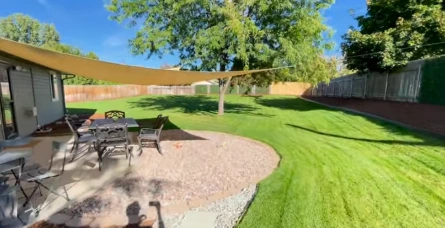
DEQ will not terminate your coverage until the site gets here.
Who needs a 1200-C?
Any construction project disturbing one acre or more of land. The permit regulates stormwater running off those sites, and it exists to keep soil and pollutants out of streams and the storm system.
Construction activities may not begin until DEQ approves permit coverage. Worth reading twice, because the approval is not a formality you catch up on later.
Source: Oregon DEQ, 1200-C Construction Stormwater Permit
1200-C or 1200-CN?
| Disturbed | Permit | Administered by |
|---|---|---|
| Under 1 acre | Local erosion control permit | Your city or county |
| 1 to 5 acres | 1200-CN | City or county, local program |
| 5 acres and over | 1200-C | Oregon DEQ, or a DEQ agent |
Some cities and districts administer the 1200-C on DEQ’s behalf. A separate 1200-CA covers Oregon Department of Transportation work, so on a highway job ask which permit the project sits under.
What you need before work starts
There is also a public notice requirement, so build that into your programme rather than discovering it late.
An approved ESCP
The Erosion and Sediment Control Plan describes how the site will be managed during construction. Approved by DEQ before any activities begin, not submitted alongside them.
Coverage approved
Registration goes to the appropriate DEQ regional office or DEQ agent.
Other permits checked
Often alongside a local grading permit, a Removal Fill permit from the Department of State Lands for wetland impacts, or a DEQ Cleanup Program file for contaminated ground.
How quickly do you have to stabilize?
The permit works on calendar days and site size. It does not have a wet season rule.
- Trigger: an area temporarily inactive for 14 or more calendar days
- Start installing stabilization measures immediately
- Immediately means no later than the end of the next business day
- Same trigger, shorter completion window
- Also applies to sites discharging to Category 5 impaired waters
- And to certain upgradient areas under the natural buffer zone options
Careful: your city is probably tighter. Inside Portland, bare soil has to be covered within two days between October 1 and April 30, and within seven days between May 1 and September 30. That city rule beats anything in the state permit through winter. On encroached buffers under natural buffer zone options 2 and 3 the permit asks you to stabilize exposed soil at the end of each day, and to complete within three calendar days where construction has permanently ceased.
Source: Oregon DEQ, 1200-C permit, Schedule A.16 Table 1
How do you close the permit out?
This is where seeding timelines matter, and where projects slip.
Temporary stabilization, in the permit’s own words, is a condition where exposed soils or disturbed areas are provided temporary vegetation or non vegetative protective cover to prevent erosion and sediment loss. In practice that means mulch, straw, blankets, matting, temporary grasses, plastic sheeting or early gravel on areas due to be paved.
For a common plan of development, the existing permit can terminate once those steps are met and the remaining unstabilized areas have their own 1200-C or 1200-CN coverage.
Source: Oregon DEQ, Schedule A.17 and Condition I.10
Hit 70 percent cover
Uniform perennial vegetation, excluding noxious and invasive weeds. The arid area exception rarely helps in the Willamette Valley. Farm use land restored to its preconstruction use is exempt from the vegetative criteria.
File within 30 days
Submit the Notice of Termination within 30 days of meeting the termination criteria.
Include the paperwork
Photo documentation of final stabilization, unless DEQ inspected within the previous 30 days. Plus the status of outstanding compliance issues and payment of all outstanding fees.
Wait for approval
DEQ approves only if Schedule A.17 conditions are met, and you stay subject to the permit until it does.
What 70 percent means for your schedule
Sprayed seed is not the finish line. It starts the growing clock.
Grass takes roughly seven to ten days to show and several weeks to thicken up. Getting to uniform 70 percent cover takes longer again, and longer still if you seed late in the year when soil temperatures are dropping.
So if you want the permit closed by a particular date, work backwards. Decide when you need 70 percent cover, allow the growing time, and seed well before that. Seeding in late October and hoping to close out in November does not work in this climate.
Common questions
Can I get coverage after work has started?
You are not supposed to. Construction activities may not begin until DEQ approves coverage.
Can the permit be transferred?
Yes. Permits can be transferred from one party to another, which is why a developer sometimes applies and then transfers to the contractor.
Who approves my ESCP?
DEQ, or the DEQ agent administering the permit in your area. Some cities and districts do this on DEQ’s behalf.
What are the fees?
Fees change, so check the current DEQ page rather than any figure you find quoted elsewhere.
Does hydroseeding satisfy the permit?
It is a stabilization method, not a sign off. What satisfies the permit is the vegetation it produces, measured against the 70 percent standard.
What happens if the vegetation does not establish?
You stay under the permit, with its inspection and reporting obligations, until the site is stabilized. The practical answer is usually to reseed, or to add blankets or other cover in the meantime.
Need cover on a 1200-C site?
Tell us the close out date you are working to and we will tell you whether seed can get there. See what we install.
[TRACKING NUMBER]- Acreage
- Slope
- Which permit you are under
- Target close out date