Hydroseed Portland Oregon for lawns and construction sites
Grass that grows, and cover that passes inspection. We work to the deadline your site is actually under, whether that is a building inspector in February or a lawn you want green by June.
Multnomah, Washington and Clackamas counties.
The city changes its rules twice a year. Here is where today sits.
What hydroseeding actually is
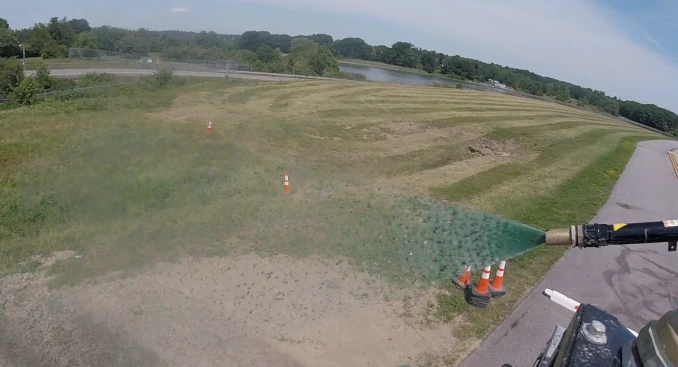
A wet mix of grass seed, mulch, fertilizer and a sticky binder called tackifier, sprayed straight onto prepared soil. The mulch holds water next to each seed and stops it washing off a slope.
Dry seed spread by hand sits on top of the ground and moves with the first hard rain. The sprayed mix bonds to the surface instead. That difference is why it ends up on cut banks, swales and new subdivisions right across the metro.
Portland runs two sets of rules
Which one applies depends only on the date. Most of the trouble people run into comes from not knowing which season they are in.
- Weekly documented inspection by an on site erosion and sediment control manager
- Extra inspection within 24 hours of any rain over half an inch in a day
- No ground disturbing work at all in the Balch Creek and Forest Park subdistricts
- Same requirement to keep soil on site, longer window to act
- The easier season to plan seeding around
- Books up through September as everyone races October 1
City rules and state rules are not the same thing. The two and seven day deadlines are the City of Portland, under Title 10. The state 1200-C permit has no seasonal rule at all, and works on site size and inactivity instead. If your site is inside Portland and over an acre, both apply. Work to whichever is tighter.
Source: City of Portland, rainy season erosion control requirements. Full detail on our Portland rules page.
Which permit is your site under?
It comes down to how much ground you are disturbing. The state permit covers anything from one acre up, and the Erosion and Sediment Control Plan has to be approved before work starts, not alongside it.
| Disturbed | Permit | Handled by |
|---|---|---|
| Under 1 acre | Local erosion control permit | Your city |
| 1 to 5 acres | 1200-CN | City or county, for the state |
| 5 acres and up | 1200-C | Oregon DEQ |
Sources: Oregon DEQ, City of Tualatin.
What it costs
Most residential work falls between 8 and 20 cents per square foot. Sod for the same yard runs several times higher once you count the labor to lay it.
Five things move the price: size, slope, how far the hose has to reach, how much soil prep the ground needs, and which mix the site calls for. A basic lawn blend costs less than an engineered product built for a two to one bank.
Larger work is quoted by the acre. Call with your numbers and we will give you a figure on the phone.
What we do
Lawns and compliance cover are the same equipment and different specifications.
New lawn installation
Bare dirt to green lawn for new construction, teardowns and failed yards.
Construction site cover
Temporary and permanent cover for sites under permit, sized to the slope and the season.
Slope and bank work
Steeper ground needs a bonded product rather than standard mulch. Spec depends on grade and rainfall exposure.
Pasture and acreage
Large lots in Clackamas and Washington counties where sod makes no financial sense.
Overseeding and repair
Thin or mossy lawns, which is common under Portland’s tree canopy.
Silt fence
Perimeter sediment control trenched in along the downhill edge, usually paired with surface cover.
Before we arrive, check your sprinklers
Most lawns that come in patchy were watered unevenly, not seeded badly. Almost nobody does this step, and it is the one that prevents the most problems.
Run each zone and walk the yard while it is wet. Rotors need about 8 to 10 minutes, smaller pop up heads about 3 to 5. Then look for where the soil is still dry. Those dry spots are where the grass will struggle, and they have nothing to do with the seed.
Fixing a head now takes ten minutes. Finding the same dry patch a month after the seed goes down means hand watering it twice a day until it catches up.
Till 4 to 5 inches deep
Roots meet little resistance through the first few inches.
Rake and grade smooth
Pull out sticks and rocks. A dip now is a dip later.
Kill the weeds, then wait
Follow whatever the herbicide label says before we spray.
Finish your beds and borders
Running a wheelbarrow across new grass undoes it.
Clear a path for the hose
We need to reach the far corners from the truck.
Common questions
How long until I see grass?
Usually 7 to 10 days for the first blades. Four to six weeks to the first mow, once it hits about 3 inches. Six to eight weeks to a lawn you can use.
Will rain wash it away?
Light rain helps. A downpour in the first day or two, before the mulch sets, can move the mix on a slope. That risk is why heavier bonded products exist, and why we watch the forecast on steep jobs.
My new lawn has brown spots. Is the seed dead?
Usually not. Brown spots are nearly always a water coverage problem. Hand water them a couple of times a day and most come back within two to three weeks.
Will seeding alone pass an inspection?
Only once it grows in. Seed on the ground is a start, not a finish. On a 1200-C site the standard is 70 percent cover.
How soon can I walk on it?
Keep foot traffic, kids and pets off for five to six weeks. Early traffic damages new grass more than people expect.
When can I mow?
Around four to six weeks, when it reaches about 3 inches. Do not cut below 2 inches. Keep the blades sharp.
When can I spray for weeds?
Wait 10 to 12 weeks. Old weed seed in the soil often comes up alongside new grass. Let the lawn establish first, then treat it.
Can I spray over my existing lawn?
No. Either start over or overseed instead. Overseeding uses a power rake and broadcast seed, which is a different job.
Do I need topsoil first?
Not always. Seed needs contact with workable soil, so it depends on what you have. Hard, compacted ground is the problem, not a missing layer of imported dirt.
What are the downsides?
Two real ones. The install window is limited, so you cannot do it any week of the year and expect the same result. And it needs steady water for the first month, which means working sprinklers or time with a hose.
Where we work
Washington County sites follow Clean Water Services standards rather than Portland’s, so say where the site is when you call.
Multnomah County
Washington County
Clackamas County
Tell us the site and we will price it
Most quotes take one phone call. If you are working toward October 1, say so and we will tell you honestly whether seed will make it.
(503) 457-0020- Square footage, or acres
- How steep the ground is
- Whether the site is under permit, and which one
- Your deadline, if you have one